

Washer Repair in Hope Mills, NC
Hope Mills residents deal with moderately hard water and power disruptions from severe weather that can strain washing machines faster than normal use alone. When your washer breaks down, Patton Appliance Repair connects you with local independent repair providers who can reach homes across Hope Mills—including areas like Cypress Lakes and Brookwood—to diagnose and fix the problem quickly. That means less downtime managing laundry for your household.
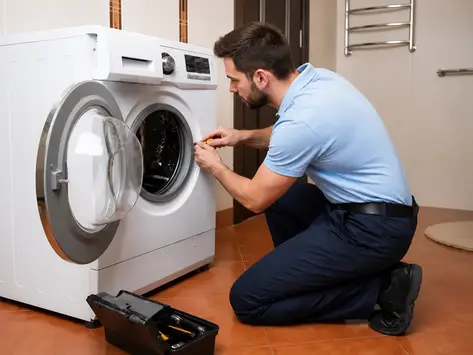
Washer Repair in Hope Mills, NC—When You Need It Most
Hope Mills homeowners rely on their washing machines year-round, but the local water conditions and electrical demands of the region can take a toll. Moderately hard water reduces efficiency and accelerates mineral buildup inside drums and hoses, while the frequent power fluctuations from severe weather—thunderstorms and tropical systems that roll through North Carolina—expose washers to voltage spikes that damage motors and control boards. When a washer stops mid-cycle or begins to leak, the disruption to daily life is immediate, and a fast repair becomes essential.
Patton Appliance Repair connects Hope Mills residents with independent local appliance repair providers who handle washer problems of all kinds, from mechanical failures to electrical issues. These providers arrive ready to diagnose the root cause, source the right parts when needed, and restore your machine to working order. Whether you're in Golfview, Rockfish, or anywhere else in Hope Mills, the focus is on getting your washer back in service and your household routine back on track. Contact Patton to be matched with a local repair provider in your area.
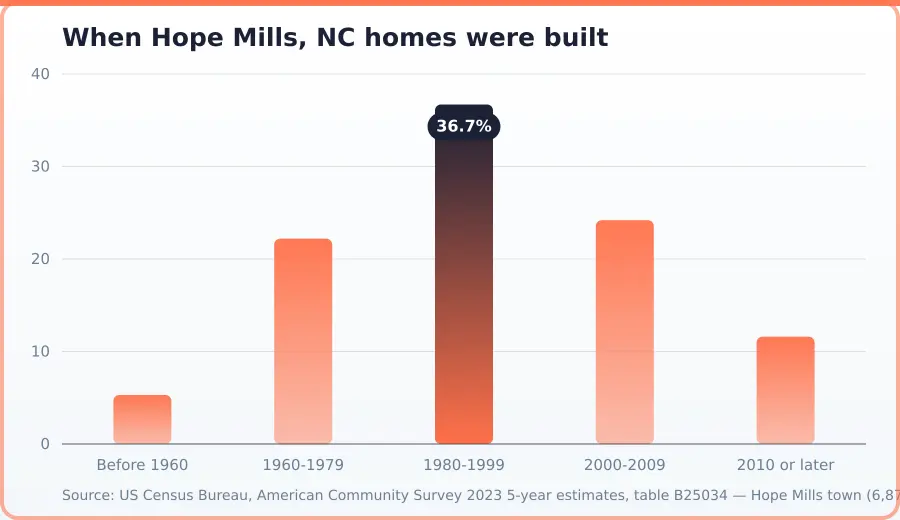
| Period | When homes were built (%) |
|---|---|
| Before 1960 | 5.3 |
| 1960-1979 | 22.2 |
| 1980-1999 | 36.7 |
| 2000-2009 | 24.2 |
| 2010 or later | 11.6 |
Source: US Census Bureau, American Community Survey 2023 5-year estimates, table B25034 — Hope Mills town (6,872 housing units). Retrieved October 5, 2026.
Common Washer Error Codes by Brand
Every manufacturer uses its own codes, so the same fault reads differently depending on who made your washer. Below is one from each — find your brand, then check the exact characters against your own model's manual.
Samsung Washer 4C
Often clearable without a technician
What it means: The washer asked for water and did not get what it expected, so it has stopped rather than run a cycle dry. Samsung shows this as 4C on newer panels, 4E on older ones and nF on some models — one fault, three displays.
Why it happens: Almost always something before the machine rather than inside it: a supply tap not fully open, a kinked fill hose behind the unit, or the small mesh screens where the hoses meet the washer silted up with scale and grit.
What you can check: Check both taps are fully open, then pull the machine out far enough to see the fill hoses are not kinked. If that looks fine, turn the taps off, unscrew the hoses at the machine end and look at the inlet screens for debris.
When to call someone: If the supply is good and the screens are clear, the inlet valve on the machine is next, and that is where it stops being an owner check.
LG Washer UE
Often clearable without a technician
What it means: The load has settled unevenly in the drum, so the washer will not take it up to spin speed.
Why it happens: Normally one heavy item washed alone, or a load that has wrapped into a rope on one side. LG also notes that a load which is too small can trip it, because there is not enough mass to balance.
What you can check: Redistribute the load by hand. If you are washing a single heavy item, add one or two similar pieces to help it balance, then restart the spin.
When to call someone: If it happens on loads that are clearly well balanced, the suspension or the sensor is worth checking.
Samsung Washer 4E
Often clearable without a technician
What it means: The same not-filling fault as 4C, shown as 4E on older Samsung panels.
Why it happens: A closed or partly closed tap, a kinked fill hose, or blocked inlet screens where the hoses connect.
What you can check: Work from the wall in: taps fully open, hoses unkinked, then the inlet screens at the machine end.
When to call someone: If water reaches the machine freely and it still will not fill, the inlet valve needs testing.
Whirlpool Washer F5 E2
Often clearable without a technician
What it means: The lid or door is not locking properly, so the machine will not begin the cycle.
Why it happens: Something is stopping the latch seating -- laundry caught under the lid, a bent strike, or a lock mechanism that is wearing out.
What you can check: Open and close the lid firmly with nothing caught in the opening, and check the strike and latch for anything obstructing them.
When to call someone: If the latch is clear and it still will not lock, the lid lock assembly is the usual culprit.
Samsung Washer nF
Often clearable without a technician
What it means: The washer is not filling — the same fault Samsung shows as 4C and 4E on other panels.
Why it happens: A tap that is not fully open, a kinked fill hose, or the inlet screens where the hoses meet the machine blocked with scale and grit.
What you can check: Check both taps, straighten the hoses, then turn the taps off and inspect the inlet screens at the machine end.
When to call someone: If water reaches the machine freely and it still will not fill, the inlet valve is next.
Kenmore Washer F20
Often clearable without a technician
What it means: The machine is not getting water into the tub.
Why it happens: Usually a shut supply valve, or a fill line that is pinched or has frozen.
What you can check: Check both taps are fully open and the fill hoses are not kinked or crushed behind the machine.
When to call someone: If the supply is good and water still will not arrive, the inlet valve needs testing.
| Brand & code | What it means |
|---|---|
| LGUE / uB | The load has settled unevenly in the drum, so the washer cannot reach spin speed safely. |
| MaytagLOC or LC | The control panel has been locked on purpose, so buttons won't respond until it's unlocked. |
| FrigidaireE1 | The top-load washer is taking an unusually long time to fill, pointing to a weak or interrupted water supply. |
| BoschE16 / F16 | The door hasn't latched securely, so the machine won't start or continue the cycle. |
| AmanaHC | Shows up when the hot and cold water supply hoses were swapped during installation. |
| MieleF10 | The incoming water supply is restricted. |
Don't see your code? Call (910) 773-4467 — we'll help you track it down.
Brands We Service
The local appliance repair providers Patton Appliance Repair connects you with handle washer repair across all major brands, including Whirlpool, Maytag, GE, LG, Samsung, Frigidaire, KitchenAid, Bosch, Kenmore, Amana, and Miele. Whether your washer needs a quick fix or a larger repair, these independent technicians serve Hope Mills with the experience to get your laundry back on track.
Common Washer Repair Problems We Fix
Won't Drain
A clogged drain hose, stuck pump, or filter buildup stops water from leaving the tub. The local provider Patton connects you with will inspect the drain path and clear the obstruction to restore normal drainage.
Won't Spin
Worn drum bearings, a broken belt, or a faulty lid switch prevent the drum from turning. Your local washing machine repair provider will diagnose the cause and repair or replace the failed component.
Leaking Water
Door seals, inlet hoses, or internal tub cracks allow water to escape during a cycle. The independent provider Patton connects you with will locate the leak source and repair it to keep your laundry room dry.
Won't Start
A broken power cord, defective control board, or failed door latch can prevent the washer from running. The repair provider will test the electrical and mechanical components to get your machine running again.
Loud or Vibrating
Foreign objects caught in the drum, worn drum rollers, or an unbalanced load create noise and movement. A local washer repair technician will identify and fix the source to restore quiet, stable operation.
Error Code on Display
Fault codes signal problems ranging from water level sensors to temperature issues. The independent provider Patton connects you with will read the code and repair the underlying cause promptly.
Why Hope Mills Homeowners Choose Patton for Washer Repair
Local Washer Repair Providers Ready
Patton connects you with independent washer repair providers near Hope Mills who understand your appliance and can respond quickly. Fast local service means less time without clean laundry.
Clear Communication Throughout Washer Repair
Independent providers in the Patton network explain what's wrong with your washer, what the repair involves, and what to expect. You'll understand the work before it begins.
Thorough Washer Repair Assessment
Local providers take time to diagnose washer problems accurately, addressing the root cause rather than quick fixes. Proper repair keeps your machine running longer.
Washers Built to Handle Hard Water
The water in this region tends toward hardness, which accelerates mineral buildup and wear on washing machine components. Patton's local providers know these conditions and help keep your washer functioning reliably.
Washer Repair FAQ — Hope Mills, NC
Washer repair addresses a range of issues—leaks, drum problems, cycle failures, drainage blockages, and electrical malfunctions. A local repair provider will diagnose the specific fault, replace worn parts like seals or pumps if needed, and test the machine before finishing. The exact scope depends on what's causing the malfunction.
Patton Appliance Repair links you directly to independent local repair providers in Hope Mills who can often respond promptly to your request. Once you contact us with details about your washer issue, we match you to a nearby technician available to assist. Response times vary by provider availability, but local service means shorter travel time to your home.
Repair costs depend on the part that failed, labor rates set by your local provider, and whether the fix requires replacement components. A simple drain cleaning costs less than a new motor or drum seal. The independent provider you're connected to will discuss pricing with you before starting work.
Before the technician arrives, clear the area around your washer and turn off the water supply if the machine is leaking. Have your washer's make and model ready—usually found on a sticker inside the drum or on the back panel. If you've noticed specific error codes or sounds, mention those to help the provider diagnose faster.
Use the correct detergent amount for your load size and water type, clean the detergent dispenser regularly, and leave the door open after each cycle to prevent mold and odor. Avoid overloading, and periodically run a cleaning cycle. These habits reduce strain on internal parts and help your washer stay reliable.
Yes. The water in this area tends toward moderate hardness, which can cause mineral buildup inside your washer over time. This buildup may reduce efficiency and accelerate wear on valves and seals. Regular descaling and using appropriate detergent for your water type can help extend your machine's life and reduce repair frequency.
Need this appliance repaired in Hope Mills? We'll connect you with a local provider.
Call (910) 773-4467Homeowner Safety Toolkit
Before You Hire in Hope Mills, NC, Check This
Before you hire anyone, use these independent national resources to confirm credentials, standards, and track record.
BBB
Look up any appliance repair company's complaint history, customer reviews, and accreditation status — a free, independent check before you hire.
Check StandingNFPA
A poorly repaired dryer, range, or water heater is a real fire risk. The National Fire Protection Association's home safety guidance covers what to check after any appliance service.
Appliance Fire Safety TipsCPSC
Check whether your specific appliance has an open safety recall before paying for a repair — some recalls cover the fix or a replacement for free.
Check for RecallsSchedule your Hope Mills repair today.
Call (910) 773-4467Our Hope Mills, North Carolina Service Area
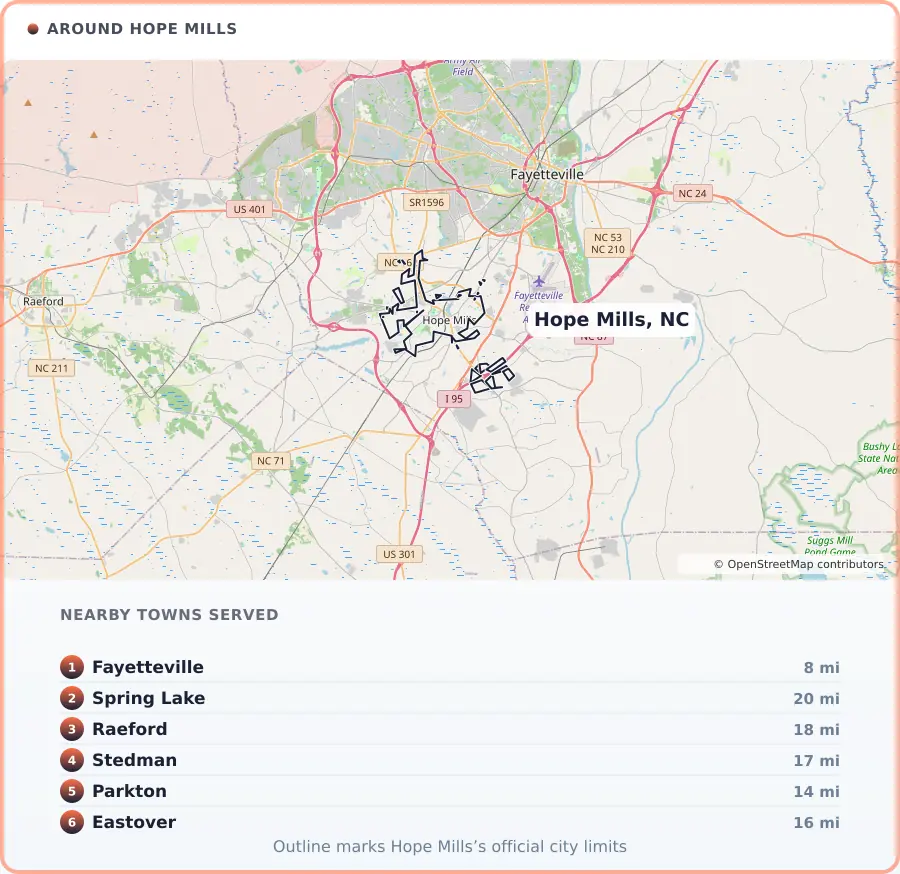
Hope Mills, NC is the centre of the service area, which extends to 6 surrounding towns. The map shows how far that reaches.
About Hope Mills, NC
Hope Mills sits just southwest of Fayetteville, close enough to Fort Liberty that military life shapes the town's rhythm even as its own roots run deeper, back to the cotton mills that once anchored its economy. Around 17,900 people call it home today, drawn by neighborhoods like Cypress Lakes and Rockfish and a steady pace of residential growth.
Retail counters, school hallways, and healthcare offices now do much of the work the mills once did, with employers like Cumberland County Schools, Cape Fear Valley Health, and the Town of Hope Mills itself anchoring daily life alongside local grocers and banks. It's a place built on practical things — service, education, and small-town government — with a bedroom-community ease that still feels distinctly its own.
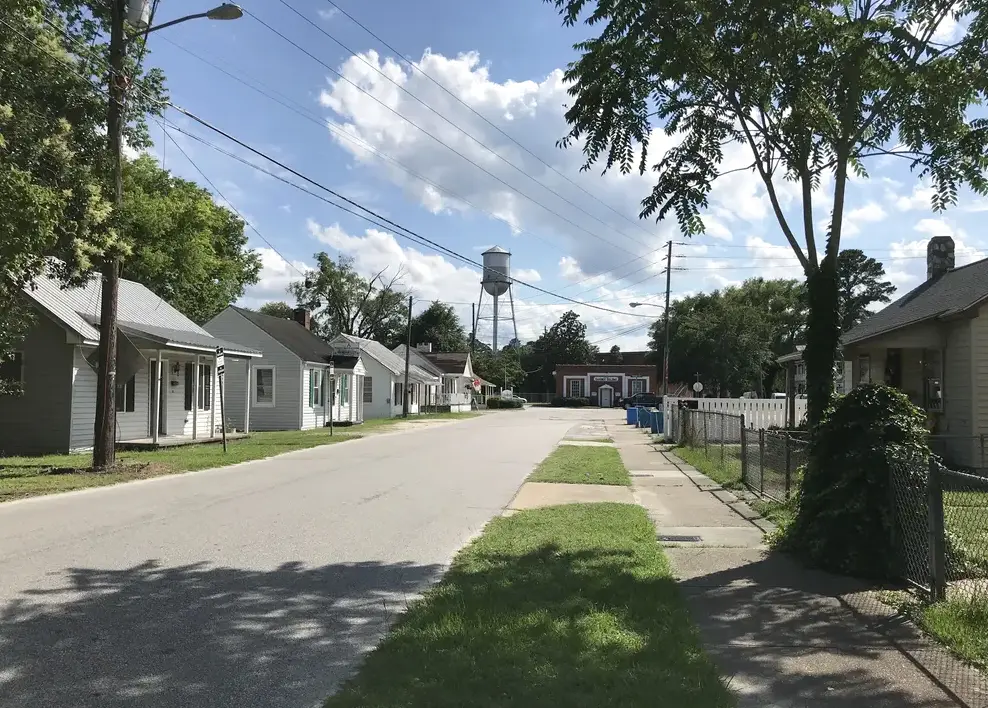
Photo: Indy beetle, CC0